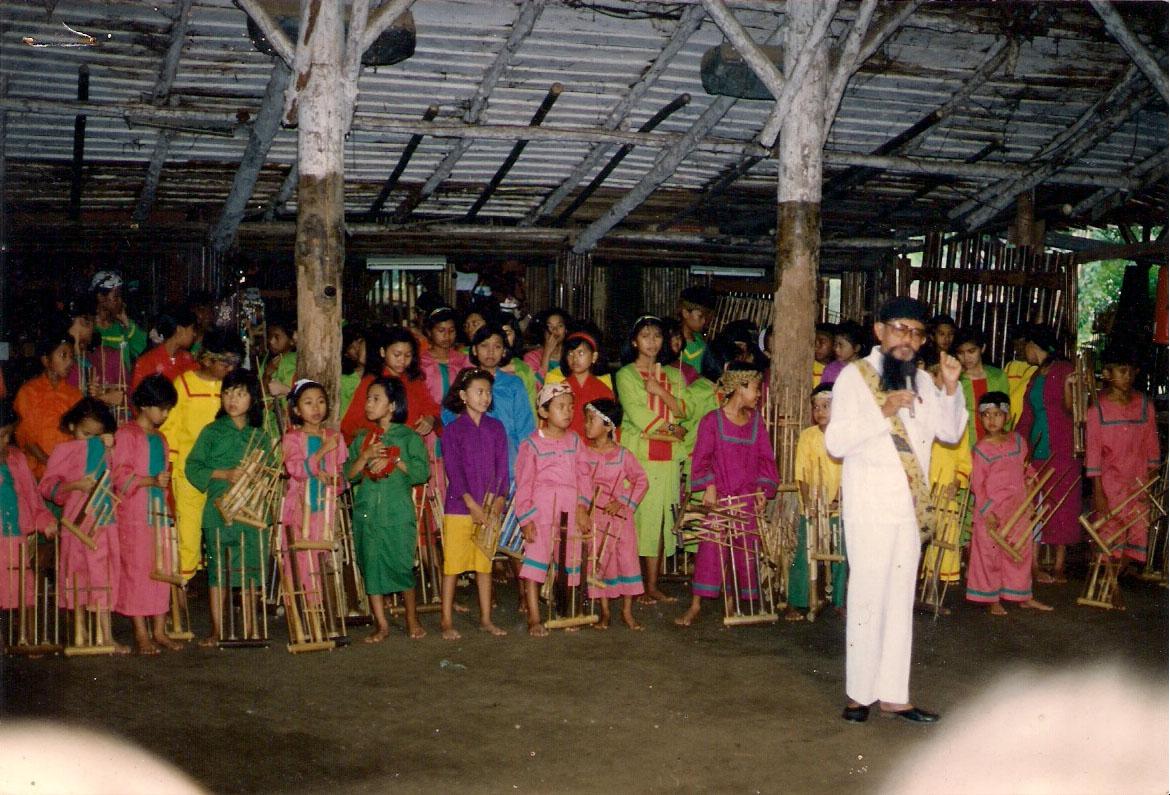
The Journey of Bamboo
History of Angklung
Tracing bamboo's resonance from sacred agrarian rituals to a UNESCO-recognized world heritage.
Early History
Angklung was born from the agrarian soul of the Sundanese people, for whom rice was the very source of life. This bamboo instrument was created as an offering to Nyai Sri Pohaci, the Rice Goddess who gives life. Since the Sundanese Kingdom (12th–16th century), angklung has been a sacred part of rituals, from planting season to the Seren Taun harvest festival.
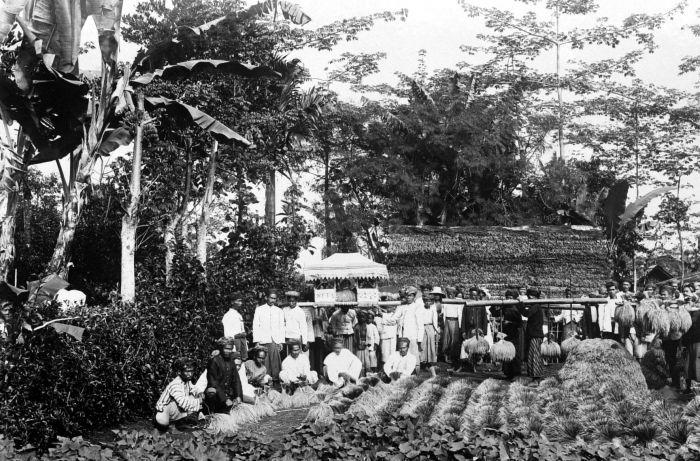
In Jasinga, Bogor, the angklung gubrag tradition has survived for more than 400 years — a living witness to how angklung was created to entice the rice goddess Dewi Sri down to earth to bless the people's rice fields.
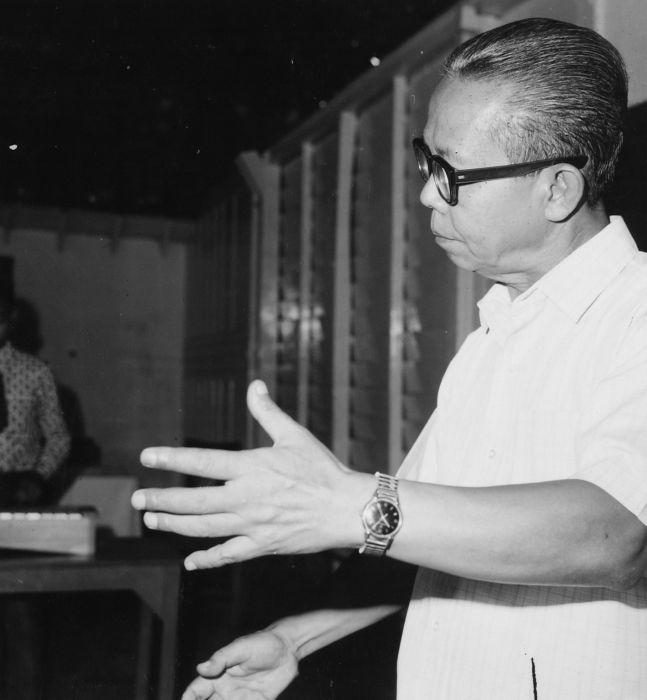
In 1938, Daeng Soetigna sparked a revolution by changing the angklung's scale from pentatonic to diatonic, opening the door for angklung to play international songs. But the true torch of preservation was only lit when Udjo Ngalagena performed at the 1955 Asian-African Conference, later founding Saung Angklung Udjo in 1966 together with his wife, Uum Sumiati.
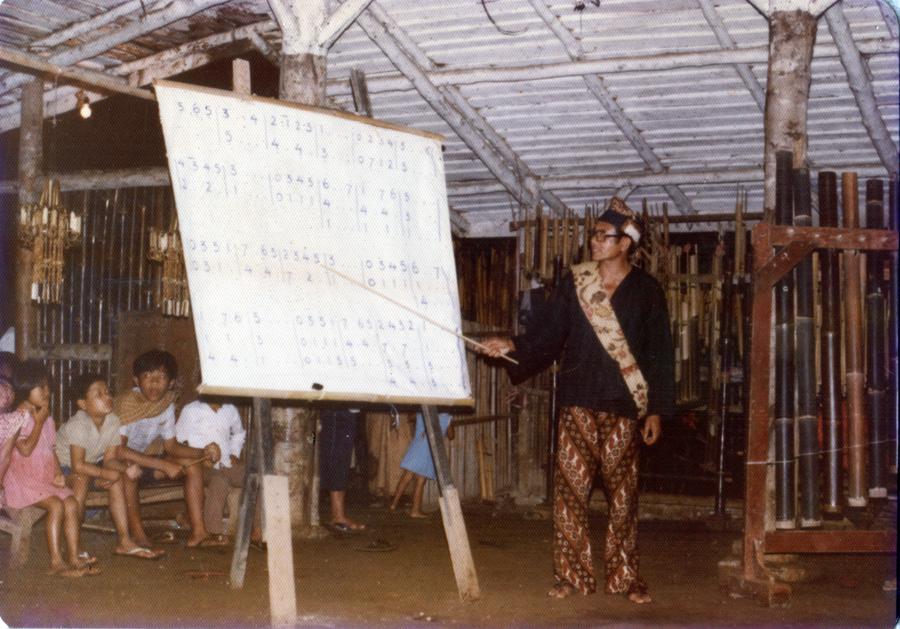
Since 1966, Mang Udjo developed playing techniques based on the pelog, salendro, and madenda scales, and taught angklung to communities from around the world. His vision was simple yet profound: to make angklung not just a cultural heritage, but a bridge for education and the empowerment of the Padasuka community. It culminated in 2010, when UNESCO inscribed angklung as an Intangible Cultural Heritage of Humanity.
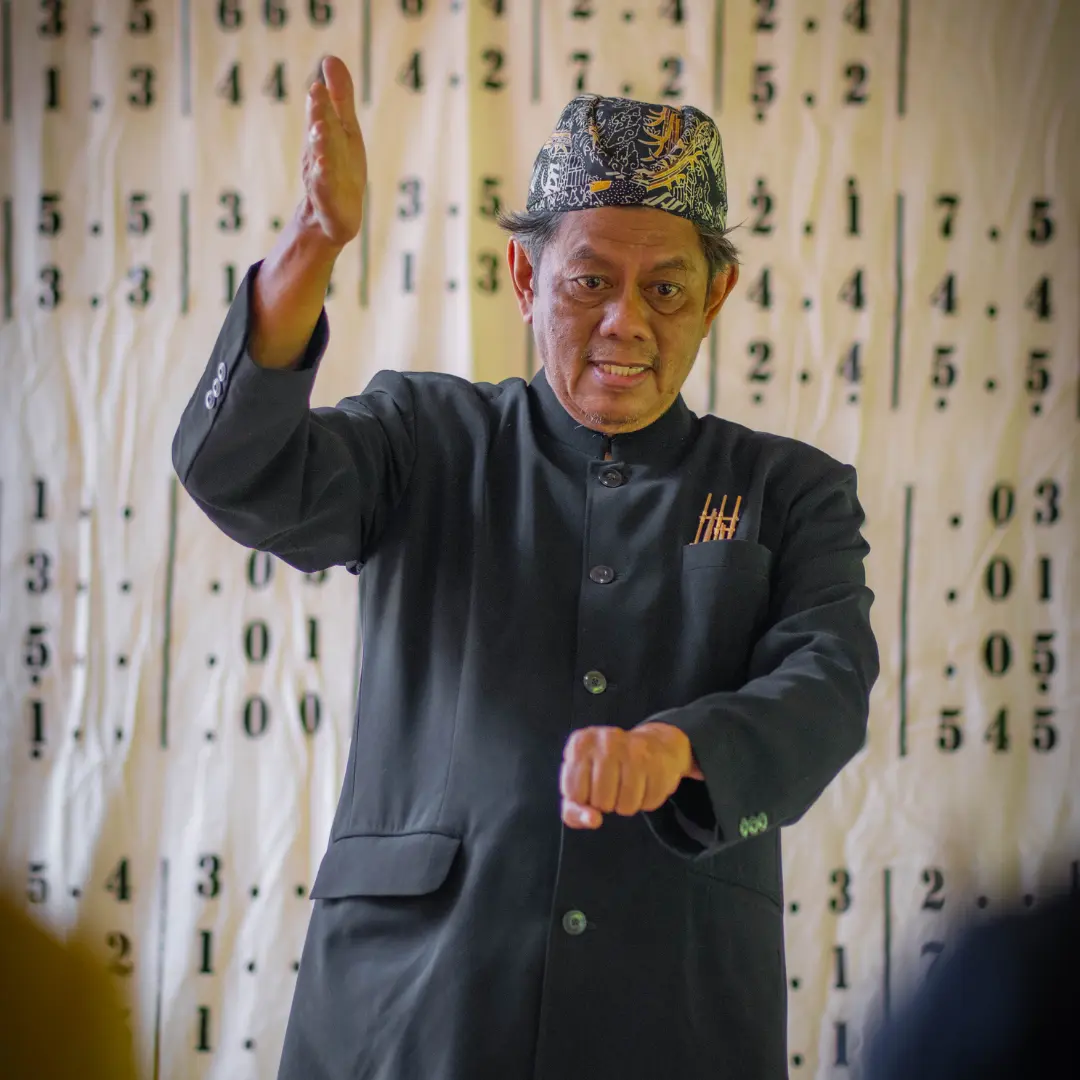
Innovation · 2008
Kang Yayan & Angklung Toel
Yayan Mulyana Udjo — Mang Udjo's sixth child — created the Angklung Toel in 2008: angklung hung upside-down on a waist-high frame, needing only a light toel (tap) to produce a note without having to hold it.
This was followed by the Angklung Toel Great (90×105 cm, 26 kg) — more portable and continually refined to this day for Saung Angklung Udjo's visitors.
A Bamboo Symphony Heard Around the World
Witness how angklung from Padasuka captured the world's heart
1031
The oldest written evidence was found on the Cibadak Inscription in Sukabumi, dated 952 Saka (1031 CE). The Sundanese king, Sri Jayabhupati, used angklung as a medium for sacred ceremonies — a spiritual link between man and the Creator.
1359
Recorded in the Nagarakretagama as a medium of entertainment during royal welcoming feasts. In Jasinga, Bogor, the oldest surviving angklung was found, estimated to be more than 400 years old — a silent witness to the grandeur of the archipelago's bamboo art.
17th Century
In the 17th century, angklung became a medium to call upon Dewi Sri (the Goddess of Fertility) to descend to earth and bless the planting season. Using tritonic, tetratonic, and pentatonic scales, this instrument became known as Angklung Buhun — bamboo vibrations carrying prayers for the prosperity of the rice fields.
1938
Daeng Soetigna sparked a revolution in Kuningan by changing the pentatonic scale to diatonic. This innovation allowed angklung to adapt to modern music and international song compositions.
1955
Angklung began to captivate the world's ears. At the Asian-African Conference, Udjo Ngalagena performed as a player — the first step toward founding Saung Udjo.
1960s
The seeds of a cultural movement grew from Mang Udjo's extended family and the active involvement of the Padasuka community in preserving tradition.
1966
Udjo Ngalagena and his wife, Uum Sumiati, founded Saung Angklung Udjo as a sacred space for education and the preservation of Sundanese art for the younger generation.
2008 — Angklung Toel
Yayan Mulyana Udjo (Kang Yayan), Mang Udjo's sixth child, created a revolutionary innovation: Angklung Toel. The angklung is hung upside-down on a waist-high frame fitted with a rebound rubber — players simply tap it to produce a note without needing to hold it. It was born out of concern over students growing tired from playing melody angklung individually.
2010 — UNESCO
Angklung was inscribed as an Intangible Cultural Heritage by UNESCO, cementing Saung Angklung Udjo's mandate to educate the world about bamboo culture. During this period, the structure of the Angklung Toel was also refined for a more stable position and optimal vibration.
2010–2020 — Angklung Toel Great
Kang Yayan launched the Angklung Toel Great series — measuring 90×105 cm and weighing 26 kg — which could be disassembled for greater portability. Even amid the pandemic, he continued refining this creation to keep it relevant and present for Saung Angklung Udjo's visitors.
Today
Saung Angklung Udjo continues to nurture harmony between performance innovation, early-childhood education, and the empowerment of an independent Padasuka community — with Mang Udjo's legacy and Kang Yayan's spirit of innovation as the foundation for the next generation.